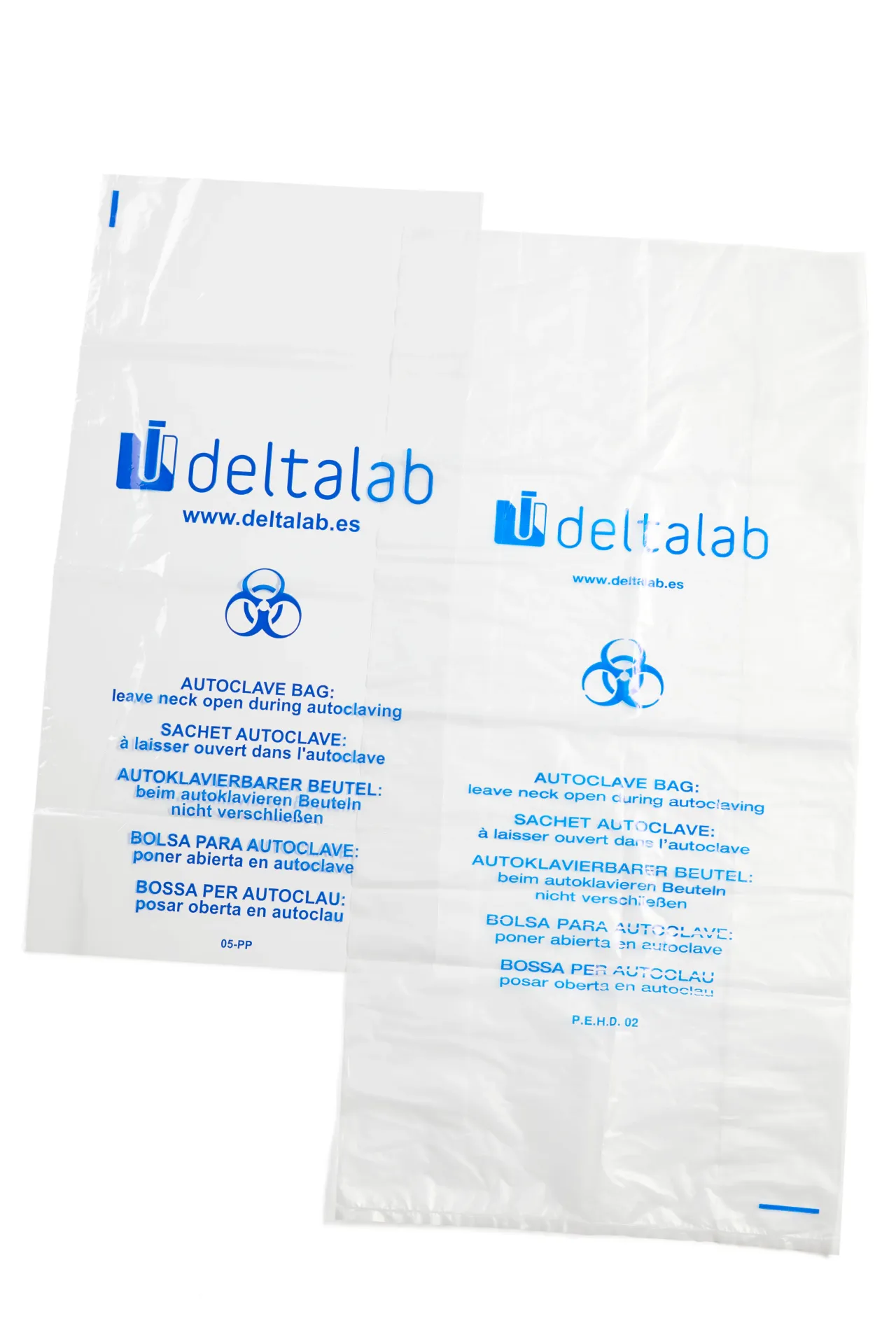


Autoclave bags
Single-use product. Used for the disposal of waste from consumables used in hospitals or clinics, which must be disposed of in bags according to biohazard waste regulations.
Also suitable for waste from clinical, microbiological, industrial, or other laboratories.
Product code 200100 is made of autoclavable polyethylene, while the rest of the series is made of autoclavable polypropylene.
The autoclave process must be carried out according to the standard procedure at 121°C, leaving the bags unsealed during the process. Air exchange between the contents of the bag and the autoclave chamber is required for the cycle to be completed correctly.
The bags are printed with the biohazard symbol, material, and description in five languages.
Consult the applicable regulations in your country or region for information on the type of waste that must be disposed of in bags.
For orders of 50,000 units or more, we can supply the bags with your logo.
_____________________________________________________________________________________________
Waste Classification by Type:
Type I Waste: Healthcare waste similar to municipal waste.
These wastes do not require specific management requirements. Examples include cardboard, paper, office and workspace materials, kitchen waste, workshop waste, garden waste, and waste from non-infectious patients.
Type II Waste: Non-Specific Healthcare Waste.
Preventive measures are required for handling, collection, storage, and transport within the healthcare facility. Examples include dressings, plaster casts, clothing, and single-use materials contaminated with blood, secretions, and/or excretions, etc.
Type III Waste: Specific or Hazardous Healthcare Waste.
Preventive measures are required for handling, collection, storage, transport, treatment, and disposal, as these wastes may pose a risk to occupational and public health. They can be divided into 5 groups: healthcare or infectious waste, anatomical waste, blood and blood products in liquid form, needles and sharps, and live and attenuated vaccines.
Type IV waste: waste subject to specific regulations.
Subject to special hygiene and environmental requirements, both inside and outside the generating facility. These include: cytostatic waste, chemical residues, expired medications, mineral and synthetic oils, waste containing metals, radioactive waste, and human anatomical remains (the latter regulated by the Mortuary Health Police Regulations).
Source: NTP 372. National Institute for Occupational Safety and Health.